
From Roblox to Real Roots: Grow a Garden connects tamariki with kai, whenua and wellbeing.
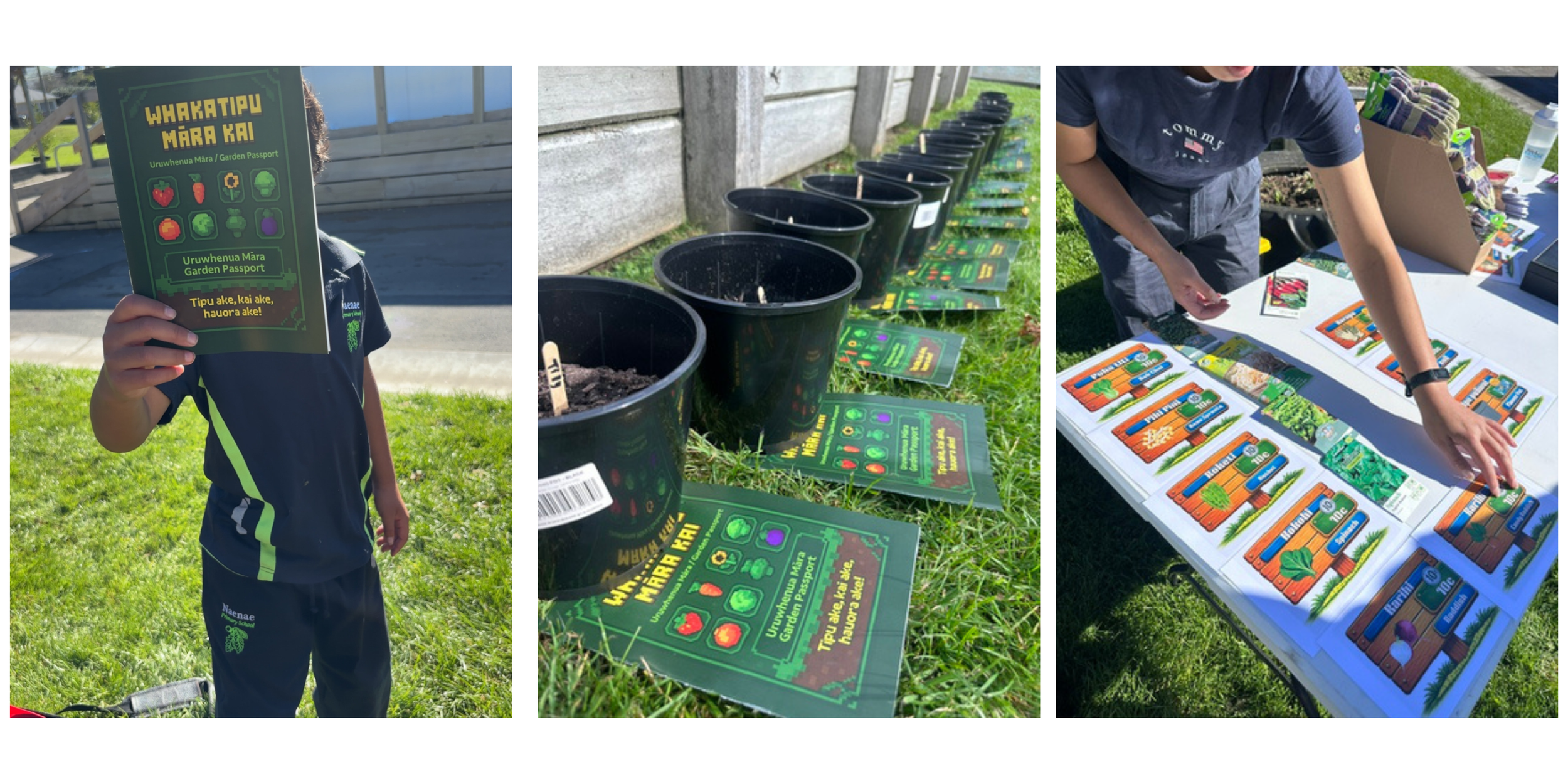
At Naenae Primary School, tamariki are using the concept of a popular digital world game and bringing it to life in the real one.
Healthy Families Hutt Valley is piloting Grow a Garden, an initiative that uses the popularity of the Roblox game Grow a Garden as a gateway into real-world kai growing, environmental learning, movement and wellbeing.
The pilot is currently being delivered with around 30 tamariki at Naenae Primary School, where children are completing garden-based “missions”, planting seeds, learning how kai grows, and exploring their role as growers and kaitiaki.
Rather than viewing gaming as separate from health promotion, Grow a Garden asks a different question: what happens when we use tamariki interests as the starting point for prevention?
For many children, digital games are part of everyday life. Grow a Garden uses the language and mechanics of gaming, missions, rewards, progress, collecting, planting, earning XP points and growing to create a bridge between screen-based play and hands-on learning. Through this approach, tamariki are not only learning about gardening, but also building confidence, curiosity and connection to te taiao.
The kaupapa aligns strongly with the Healthy Families Kai Theory of Change, which seeks to shift local kai systems toward environments where healthy kai is accessible, locally grown, culturally meaningful, and connected to whānau, whenua and community wellbeing. Grow a Garden contributes to this shift by helping tamariki understand where kai comes from, how it is grown, and how they can participate in local kai systems from an early age.
At its core, Grow a Garden is also about kai motuhake and kai sovereignty. It supports tamariki and whānau to reconnect with the knowledge, skills and confidence to grow kai for themselves. While the pilot is small, the potential system shift is significant: children are beginning to see themselves not only as consumers of food, but as growers, learners and kaitiaki. This helps build the foundations for whānau and communities to have greater agency over their kai futures.
For facilitator Sharnae Morral-Hopa, the pilot has created an opportunity to extend the reach of kai sovereignty advocacy to younger tamariki.
“Running this pilot has been incredible because it has completely shifted our reach. Previously, our advocacy for kai motuhake and food sovereignty was focused on rangatahi and adults, so being able to plant these seeds with our tamariki is a massive milestone,” says Sharnae.
She says the programme has shown how powerful the kaupapa can be when it connects with tamariki in a way that feels familiar and exciting.
“They show up every week completely locked in to do the missions and earn XP points. They are sharing their excitement with their kaiako and peers then taking that energy home to their whānau, which is exactly what we want.”
Early feedback from Naenae Primary School has also been strong. Deputy Principal Kirsten says Grow a Garden has quickly become something tamariki look forward to each week.
“Our tamariki are loving Grow a Garden. I have tamariki asking if it is Friday yet! They are always bugging Nanny Wendy, our caretaker, to let them into the swimming pool where the plants are kept to see how much they have grown,” says Kirsten.
For the school, the initiative is supporting more than gardening knowledge. It is contributing to wider learning, hauora and wellbeing.
“We are really grateful to be part of an initiative that is teaching our ākonga skills for the future and their own hauora. We are also doing the Mitey Programme through the Sir John Kirwan Foundation and gardening is a great tool to have in your mental wellness kete.”
The impact is also being felt by tamariki themselves. For Billy, one of the participating students, the excitement is simple:
“I get excited when I get to see how my plant is growing.”
Other tamariki shared that they enjoy planting, using their Grow a Garden booklet, earning sheckles to buy gardening items, and learning new gardening skills.
For Healthy Families Hutt Valley, this emerging outcome shows the potential of designing health-promoting initiatives with tamariki, rather than for them.
Healthy Families Hutt Valley’s role has been to identify the systems opportunity, develop the concept, support the prototype, and connect the kaupapa to wider prevention outcomes. By testing the idea in a school setting, the team is gathering insights about how digital culture can be used as a positive lever for kai systems change, physical activity, learning and wellbeing.
Although the pilot is still underway, Grow a Garden is already showing promise. It is creating new pathways for tamariki to connect with kai, encouraging whānau conversations at home, and helping schools explore practical, engaging approaches to wellbeing.
Grow a Garden demonstrates that prevention does not always start with a programme. Sometimes it starts by noticing what tamariki are already excited about and using that as the doorway into deeper learning, connection and change.
As the pilot continues, Healthy Families Hutt Valley will keep capturing insights from tamariki, whānau, school staff and the facilitator to understand how Grow a Garden could be strengthened, adapted and scaled across other school communities.